

Hospital digital transformation is opening up many opportunities to improve management efficiency and the quality of medical examination and treatment. However, results in many places have not yet met expectations.
Digital transformation has become one of the important development directions for many hospitals in recent years. From implementing electronic medical records and digitizing processes to applying technologies that support management, many healthcare facilities are gradually changing the way they operate to meet increasingly high demands for service quality and management efficiency.
However, the level of digital transformation varies significantly among hospitals. Some organizations have built integrated operating systems, while many facilities still face difficulties connecting data, optimizing processes, or effectively utilizing the technology platforms they have invested in. This shows that digital transformation is not only about technology but also involves people, processes, and long-term development strategies.
Digital transformation is becoming a development trend for many hospitals
The application of technology to healthcare activities is no longer limited to the goal of digitizing records or replacing traditional paperwork. Many hospitals are aiming to build a working environment in which data is connected, processes are optimized, and management decisions are supported by real-time information.
This change stems from the practical needs of healthcare facilities. The growing volume of data, increasing operational pressure, and rising patient expectations have exposed many limitations of traditional management methods. Digital transformation therefore becomes a foundation for hospitals to improve operational efficiency and prepare for development models in the future.
The current state of hospital digital transformation shows many positive signs
In recent years, many hospitals have invested in management systems, data platforms, and digital solutions to support operations. Some facilities have gradually implemented electronic medical records, connected data between departments, and digitized many processes in medical examination and treatment.
These changes help shorten work processing times, reduce manual tasks, and enable healthcare staff to access information more quickly. Patients also benefit from more convenient services such as appointment scheduling, information lookup, and access to health records on digital platforms.
Nevertheless, the digital transformation landscape remains uneven. Each hospital has different infrastructure, resources, and implementation roadmaps, so the results achieved also vary considerably.
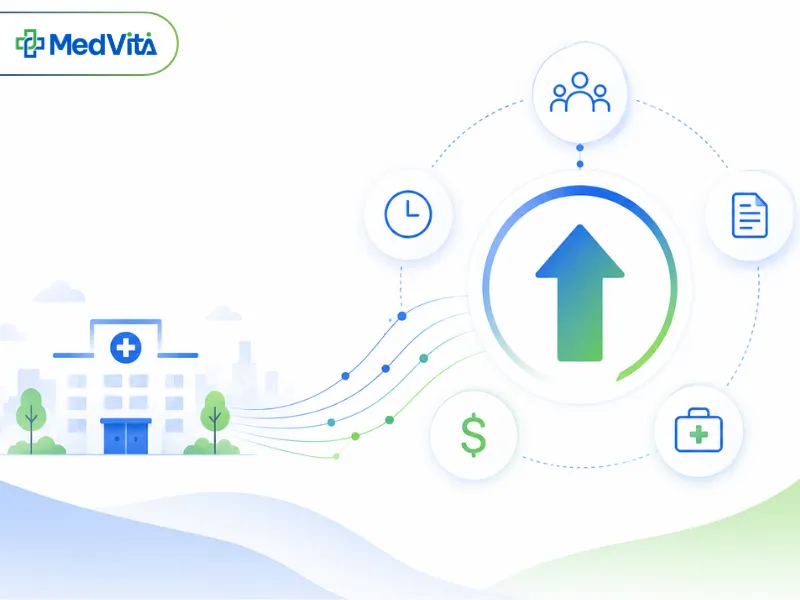
The barriers are no longer technology but operational capabilities
In the past, investing in technology was a major challenge, but today many hospitals have greater access to a wider range of digital platforms. However, implementation still faces many difficulties when data is not connected, operational processes remain fragmented, and systems operate independently.
In many cases, hospitals have invested in multiple software solutions, but staff still have to enter data repeatedly or process information manually. This reduces the effectiveness of investments and creates additional pressure on healthcare staff.
In practice, the value of digital transformation lies not in the number of software solutions deployed, but in the ability to connect systems, synchronize data, and help people work more effectively.
Digital transformation is entering the operational optimization phase
After the initial phase focused on digitization, many hospitals are shifting toward operational optimization. This is a phase in which technology not only supports information storage but also contributes to improving how hospitals organize, manage, and utilize data.
Modern management platforms allow data to be shared among multiple departments, helping reduce work processing time and improve coordination between departments. In addition, the integration of AI tools also opens up possibilities for data analysis, operational support, and improved decision-making quality.
This trend shows that digital transformation is developing in a more comprehensive direction, with technology becoming a foundation supporting hospital operations rather than merely solving individual problems.
A comprehensive solution helps hospitals effectively leverage digital transformation
For digital transformation to deliver long-term value, hospitals need more than software serving individual functions. The important thing is to build a system capable of connecting data, synchronizing processes, and enabling departments to coordinate effectively.
A comprehensive solution helps hospitals implement digital transformation according to a clear roadmap, limit overlapping investments, and create a foundation for future expansion. When data is centrally managed and processes are standardized, hospitals can improve operational efficiency without having to replace the entire system currently in use.
This is also how many healthcare facilities are choosing to gradually build smart hospital models, in which technology is applied to support people and improve service quality.

MedVita accompanies hospitals on their digital transformation journey
MedVita is developed with the goal of becoming a platform that supports healthcare facilities in implementing digital transformation in an integrated and sustainable manner. The solution focuses on connecting data, optimizing processes, and enabling hospitals to effectively leverage new technologies on a unified system.
AI technologies integrated into MedVita play a role in supporting data processing, automating certain tasks, and providing information for management activities. This approach helps healthcare staff reduce repetitive tasks, while managers have more data-driven grounds for making decisions.
In addition to its technology platform, MedVita also accompanies hospitals throughout the implementation, training, and system optimization process at each stage. This helps healthcare facilities adopt digital transformation in line with their current conditions, reduce operational risks, and establish a foundation for long-term development.
Effective digital transformation starts with the right solution
Hospital digital transformation is opening up many opportunities to improve management quality and enhance the patient experience. However, for technology investments to create real value, hospitals need a solution capable of connecting data, optimizing processes, and supporting healthcare staff throughout the implementation process. With a people-centered approach, MedVita aims to integrate digital technologies and AI technologies on a unified platform, helping healthcare facilities build an efficient operating system and gradually develop toward the smart hospital model.