

Many hospitals have been facing difficulties in hospital digital transformation during the implementation, connection, and operation process. What is creating these barriers?
Digital transformation is becoming one of the important development directions of the healthcare sector. Many hospitals have invested in software systems, digitized records, and gradually applied technology to management activities. However, not every project delivers the expected results.
In reality, many hospitals still face difficulties during the implementation process. Data is not yet connected, operating processes remain fragmented, and staff spend a lot of time becoming familiar with new systems. This causes digital transformation to take longer, while the results have not been commensurate with the resources invested.
So what are the reasons why hospitals face many obstacles in digital transformation? And how can this process take place more effectively and sustainably?
Digital transformation is no longer an option but has become a development necessity
The volume of healthcare data is growing, management requirements are becoming increasingly complex, and patient expectations are constantly changing. If they continue operating through traditional methods, hospitals will face many difficulties in improving service quality and optimizing resources.
That is why more and more healthcare facilities are implementing electronic medical records, hospital management systems, data platforms or AI application solutions. The goal is not only to digitize information but also to build a more efficient operating system.
However, digital transformation is a process of changing how hospitals manage, coordinate, and utilize data. If technology is only invested in without changing operating methods, hospitals will find it difficult to achieve the desired results.
Barriers causing many hospitals to face difficulties in digital transformation
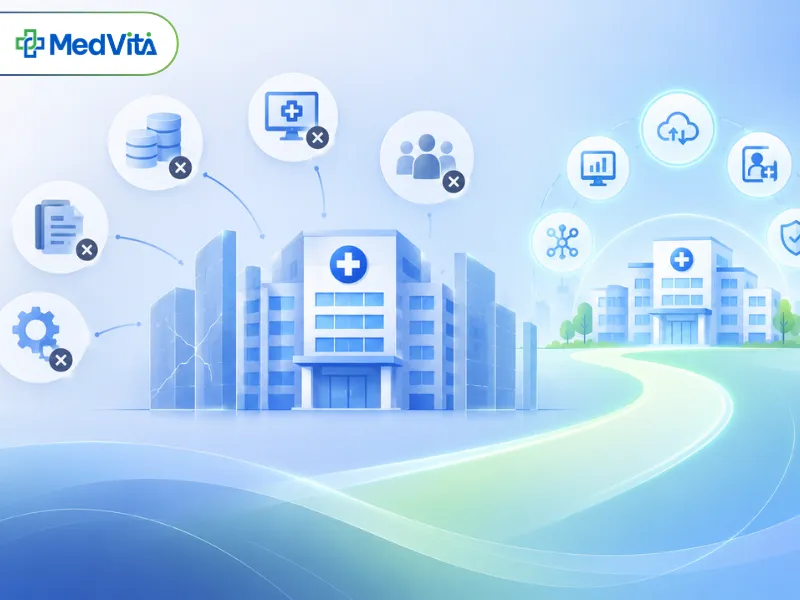
One of the most common barriers is that data is stored across many different systems. Each software serves a separate function but lacks connectivity, causing information to be fragmented and difficult to exploit.
In addition, many hospitals implement digital transformation in phases with different providers. Without an overall architecture, systems are difficult to integrate and generate more manual processing tasks.
Difficulties also come from human factors. Digital transformation not only requires technology investment but also requires staff to change their working methods. If new processes are too complicated or unsuitable for actual operations, adopting technology will become a burden instead of creating value.
In addition, issues related to budget, data security, and long-term system maintenance also cause many hospitals to consider carefully before implementing large-scale projects.
Why does technology investment still not deliver the expected results?
Many hospitals have invested in multiple software systems but still have to process work manually. The cause is not a lack of technology but rather how systems are implemented and operated.
When data cannot be shared between departments, employees still have to enter information multiple times or verify data using traditional methods. This reduces system efficiency and creates additional pressure on healthcare staff.
In addition, if technology is not designed to fit the actual processes of the hospital, users will face difficulties during adoption and utilization. Over time, many features may not be used properly or may remain unused.
This shows that successful digital transformation does not depend on the number of software systems deployed, but on the ability to connect data, optimize processes, and support people in using technology effectively.
Digital transformation requires an overall solution instead of multiple separate systems
To achieve effective digital transformation, hospitals need a platform capable of connecting processes and data within the same system.
Instead of deploying multiple independent software systems, solutions need to be built with a unified architecture so data can flow seamlessly between departments. When information is synchronized, healthcare teams can reduce repetitive tasks and coordination becomes more convenient.
An overall solution also helps hospital leaders monitor operations on the same platform. Operational indicators, resource utilization status, or process efficiency can be continuously updated, providing a foundation for faster and more accurate decision-making.
Criteria for choosing a partner during the digital transformation process
Choosing a solution provider is not only based on software features but also requires consideration of long-term partnership capabilities.
A suitable partner needs to understand hospital operating characteristics, be able to advise on implementation roadmaps by stages, and support data connectivity between existing systems. This helps hospitals reduce risks during transformation and better utilize previous investments.
Besides technology factors, training capabilities, operational support, and future system expansion are also important criteria. Digital transformation is a continuous process, so hospitals need a solution that can develop alongside actual needs.
MedVita accompanies hospitals on their digital transformation journey
MedVita was developed with the goal of supporting healthcare facilities in building a comprehensive digital transformation platform, where data, processes, and people are connected within the same system.
Instead of focusing on individual problems, MedVita aims to synchronize multiple hospital activities, from data management, process optimization to operational support and AI application. This approach helps hospitals gradually reduce manual tasks, improve collaboration efficiency, and create a foundation for the smart hospital model.
AI in MedVita is oriented as a tool supporting healthcare teams in data exploitation and faster decision-making. Technology does not replace doctors or healthcare staff but contributes to helping them work more effectively in an environment with increasingly large amounts of data.
Besides technology solutions, MedVita also accompanies hospitals throughout the implementation, training, and system optimization process. This helps healthcare facilities gradually approach digital transformation according to a roadmap suitable for their current situation and development goals.
Having the right partner from the beginning helps digital transformation become more effective
Difficulties in hospital digital transformation do not only come from technology but also from how data, processes, and people are organized during implementation. With an overall solution and a suitable partner, hospitals can gradually remove operational barriers, effectively exploit data, and build a solid foundation for the smart hospital model. With the orientation of AI accompanying, not replacing people, MedVita aiming to serve as a comprehensive solution helping healthcare facilities implement digital transformation effectively and develop sustainably.